In the world of payment processing, the number 255 million represents not just a statistic, but evidence of our commitment to excellence.
On September 18th and October 16th, we marked a significant milestone within Payments Hub one of our business units at Getnet Platforms.
April 20, 2026
Payments intelligence should sit at the centre
Payments aren’t just a mechanism for moving money. They are a continuous stream of operational data, reflecting how clients behave, how corridors evolve and how a payments business performs in real time.
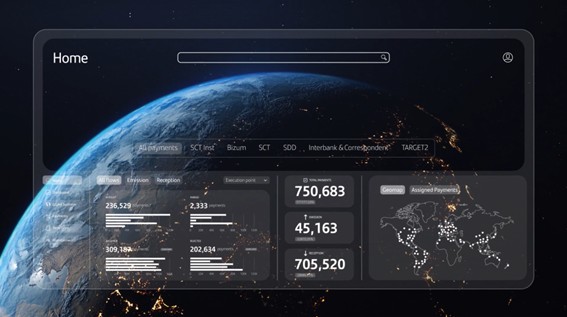
Payments aren’t just a mechanism for moving money. They are a continuous stream of operational data, reflecting how clients behave, how corridors evolve and how a payments business performs in real time.
Financial institutions should treat them as such if they want to maximise their value, but for many this data is still treated as something to look back on, rather than act on. It is captured, aggregated and reviewed after the fact, often through dashboards that show what has happened, but not what is happening now.
This creates a fundamental misalignment. Payments operate in real time, but the decisions that shape them often do not.
Payments data is already a live signal
Every transaction contains information about routing, pricing, timing, counterparty behaviour and operational outcomes. As payments become richer and more structured, particularly with the adoption of standards such as ISO 20022, the volume and quality of this data continue to increase.
But the value of payments data is not in its existence, it’s in how it is used. Many institutions rely on reporting cycles that reflect past activity rather than current behaviour, limiting their ability to act on it commercially. By the time insights reach decision-makers, they no longer represent the state of the business in motion.
In a payments environment defined by speed, this delay matters.
The cost of retrospective decision-making
When payments data is used only retrospectively, institutions are forced into a reactive position. Pricing is adjusted after margins have already shifted, operational issues are addressed after they have impacted client experience, and liquidity decisions are made once exposures have already materialised.
Changes in corridor volumes, shifts in routing behaviour or emerging client preferences can signal growth or inefficiencies. But if these patterns are only visible after reporting cycles are complete, the ability to act is limited.
This is particularly relevant in complex environments such as cross-border payments, where multiple variables – including foreign exchange, regulation and liquidity - interact continuously. The challenge is often one of execution rather than capability.
Instead of analysing corridor performance after the fact, teams can monitor flows, margins and patterns closer to real time. Rather than using static pricing models, adjustments can be made more dynamically in response to live conditions. And instead of reacting to liquidity imbalances, treasury teams can better anticipate and manage exposure with more timely data.
This approach brings payments intelligence closer to day-to-day operational impact. It enables decisions to be made in context, rather than in hindsight. It also reflects the broader industry shift, where payment infrastructure is no longer static. It is adaptive, with performance continuously monitored and refined.
Embedding intelligence at the core
At this shift takes place, it is important to recognise that payments are not simply a layer of functionality. They are regulated, operational infrastructure at the centre of everything. Embedding intelligence into payments requires more than analytics capability. It depends on the infrastructure that can operate securely across jurisdictions, support the integration of compliance within the payment flow, and scale reliably with growing volumes.
At Getnet Platforms, this thinking is embedded into how our platform is designed and operated. Through Payments Hub and Quantum, our operational layer, payments data is integrated directly into the infrastructure. Insight is available alongside execution, giving teams a unified, real-time view of flows, performance and exceptions across corridors, rails and entities.
As pricing margins, routing decisions or liquidity exposure shift, we enable teams to respond more quickly. This model is grounded in what we already run within Santander. It reflects a focus on execution at scale, where payments infrastructure must support both operational resilience and continuous optimisation in live environments. By moving from retrospective analysis to real-time decisioning, banks and financial institutions can improve operational performance, respond to risk as it emerges, and, crucially, capture commercial opportunities as they arise.
As payments become faster and more data-rich, competitive advantage increasingly depends on how effectively institutions can act on the intelligence generated within their own systems. The institutions that succeed will be those that reduce the gap between transaction and insight, and align decision-making with the real-time nature of payments themselves.